Maryam Namazie
French: La Journée mondiale du hijab et l’alchimie politique qui transforme la coercition en choix
Every year on 1 February, World Hijab Day invites women, primarily those whose refusal carries no consequence, to wear a hijab for a day. This invitation is framed as empathy: an opportunity to understand and affirm tolerance. In fact, though, World Hijab Day is part of a political project to repackage an instrument of coercion into a symbol of ‘choice.’ The language of choice is only for those who comply. Removing the hijab is never a ‘choice.’ This is not solidarity. It is whitewashing. Celebrating the hijab while severing it from the system that produces it performs a political service not for women but for those in power. It sanitises women’s subordination.
The hijab does not exist in a vacuum. It is embedded in power, history and enforcement. It is part of a system of governance over women operating through the Islamic state, law, family, community, fear, shame, belief and modesty culture. In the diaspora, control continues as the state outsources discipline to community and religious leaders.
The hijab is one expression of a much older project to keep women in their place. It trains women to absorb responsibility for the social order through their own bodies. Societies depend on women for reproduction, care, labour and social continuity. Restricting women’s autonomy maintains the social hierarchy.
From early childhood, girls are trained to monitor themselves with their hijab. Fear is internalised as conscience. Obedience is internalised as morality. With internalised shame, enforcement becomes largely unnecessary. Women and girls learn to disappear. They police one another. Domination becomes self-sustaining. Many even come to believe in the moral necessity of the hijab. This is not delusion in a simplistic sense. It is survival. Fear precedes belief. Belief soothes fear. Over time, belief feels authentic. Nevertheless, belief formed under threat does not negate coercion.
Hidden behind the language of modesty and choice, enforcement secures ownership. Across patriarchal systems, predating capitalism and surviving regime changes, women’s sexuality is not merely controlled; it is socially and politically claimed by fathers, husbands, religions, nations and states. The hijab is one marker to say that a woman is already owned, already regulated, already spoken for. The language of ‘choice’ diverts attention from ownership and punishment, aims to isolate dissenters as aberrations and transforms structural coercion into individual preference.
The far-right also treats women’s bodies as public terrain to be governed in the service of social order. Their dispute with the Islamists is not over whether women should be controlled, but over who controls them. Women are valued not as autonomous subjects but for what their bodies produce and represent for the nation, Christianity, the family and the ‘white race.’ This is why far-right movements fixate on birth rates, motherhood and sexual conduct and why women’s refusal is framed as moral decay or social collapse. As with Islamism, women’s autonomy is treated as a threat and dissent is disciplined through shame, exclusion and violence.
This is why women who transgress their assigned role are treated as existential threats. It is a woman reclaiming what patriarchy denies her.
Much of today’s discourse around the hijab focuses on individual testimonials without any structural analysis. The main political question is why women and girls are punished for refusing to wear the hijab.
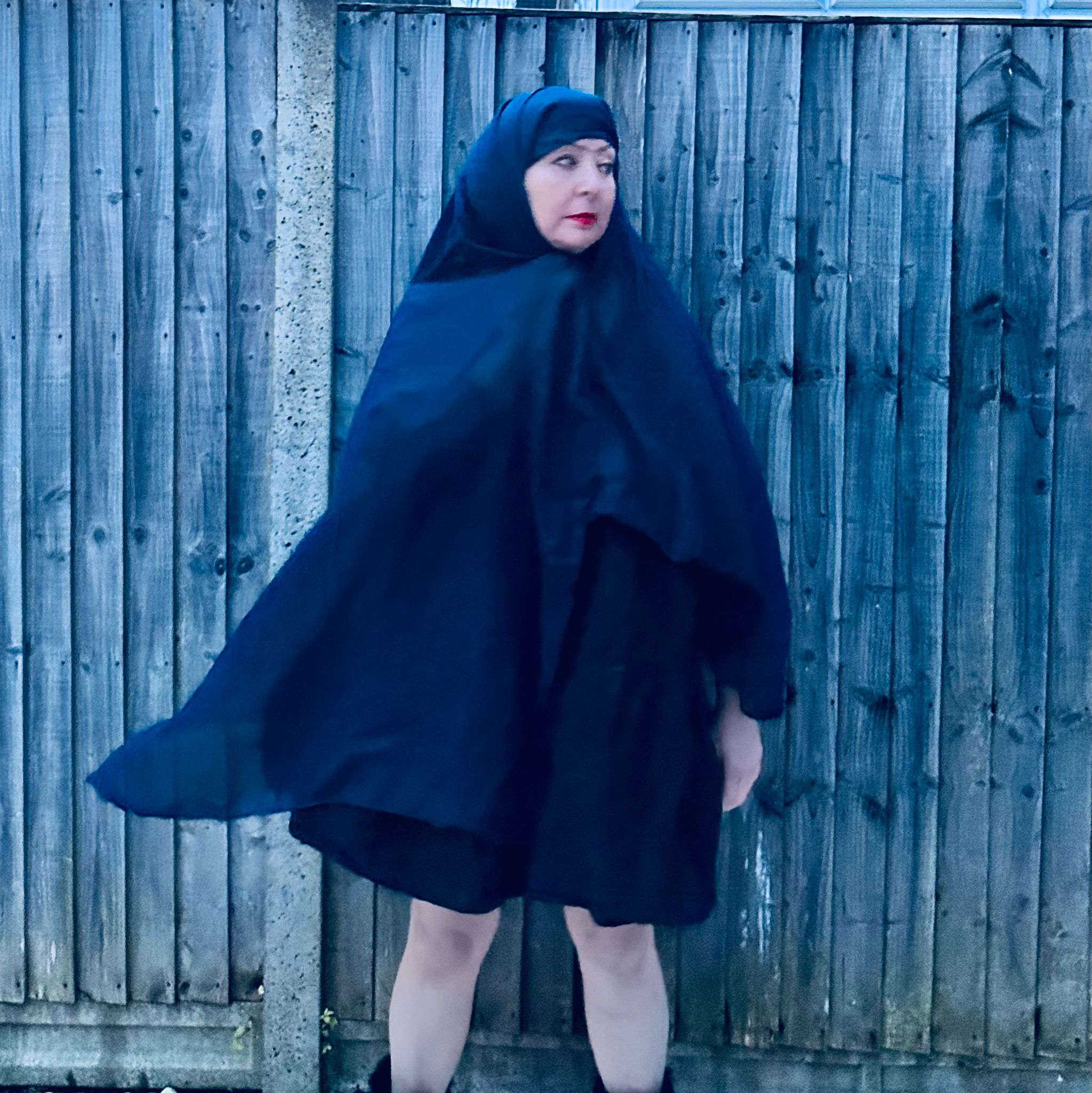
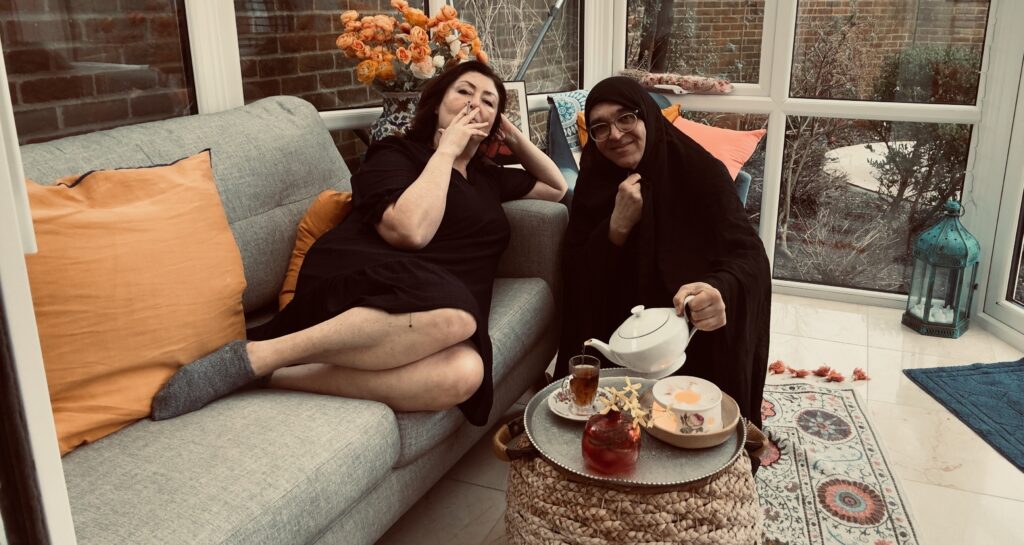
Putting the hijab on men like last year’s Ex-Muslims International campaign, or burning the hijab in solidarity with the women of Iran are refusals to reframe an instrument of domination into a harmless piece of clothing. It says the hijab is enforced. It is punished. It is defended with violence. It says that compliance and submission are not the same as consent.

It is important to add: criticising the veil as a system of control is not an attack on women who wear it, any more than condemning female genital mutilation is an attack on women who have been mutilated. No-one serious confuses the victim of a practice with the practice itself.
Moreover, to claim that structural criticism amounts to ‘shaming’ is to shift responsibility away from religion, the clerics and the state and onto those with the least power. It demands silence from dissenting women while granting immunity to the systems that police them.
World Hijab Day functions as ideological cover, whereas No Hijab Day functions as disruption. World Hijab Day depends on women’s compliance and the political alchemy that reframes coercion into choice. No Hijab Day depends on women’s collective refusal and resistance. And as the saying goes, it is disobedient women who make history.
Leave a Reply