Author: Maryam Namazie
-
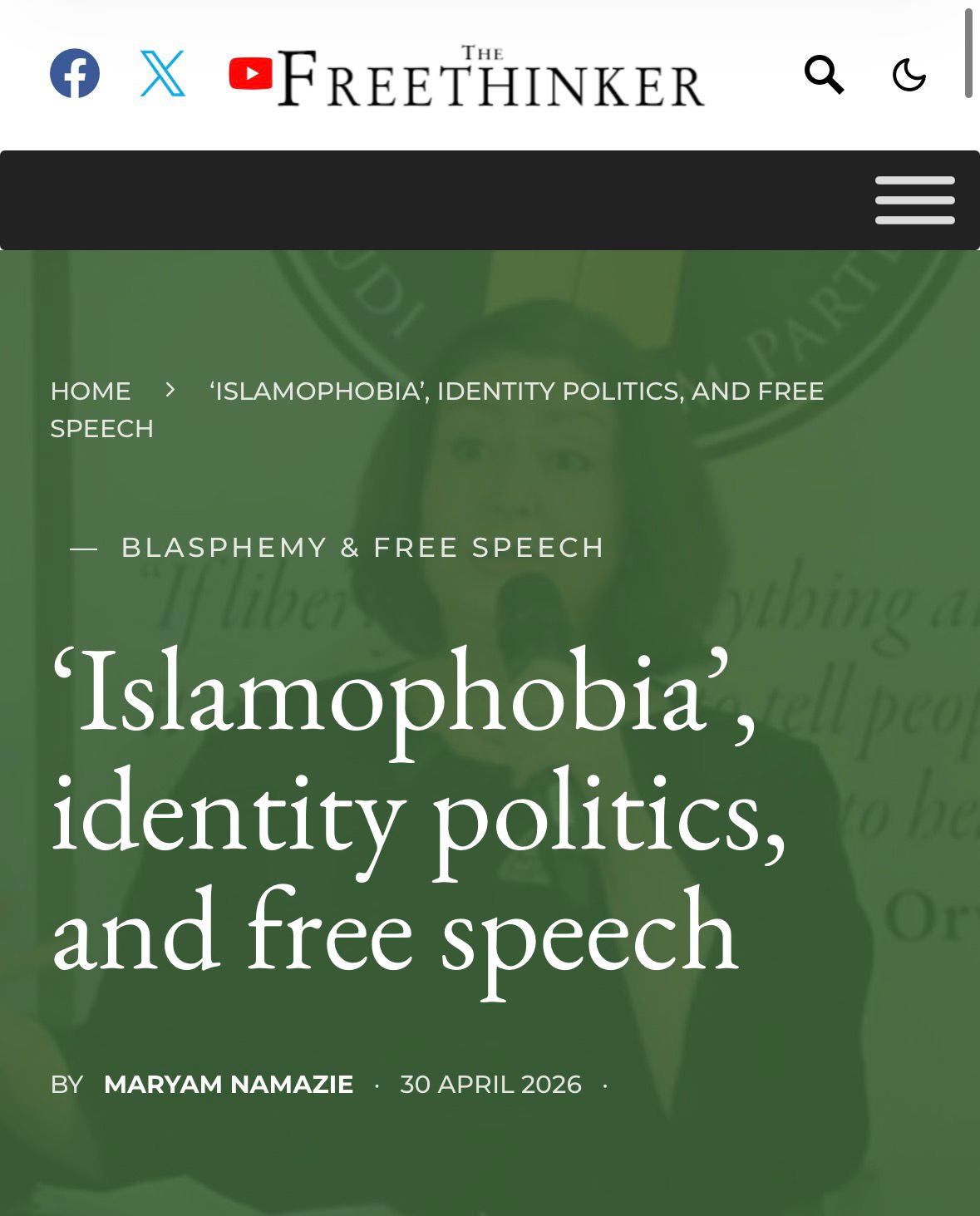
‘Islamophobia’, identity politics, and free speech
The following, first published in The Freethinker, is an expanded and updated essay based on Maryam Namazie’s remarks at the launch of Steven Greer’s book, Islamophobia and Free Speech, on 15 April 2026, hosted by the Free Speech Union. Greer is Professor of Law at the University of Bristol. He was accused of ‘Islamophobia’ in 2021, a charge that…
-
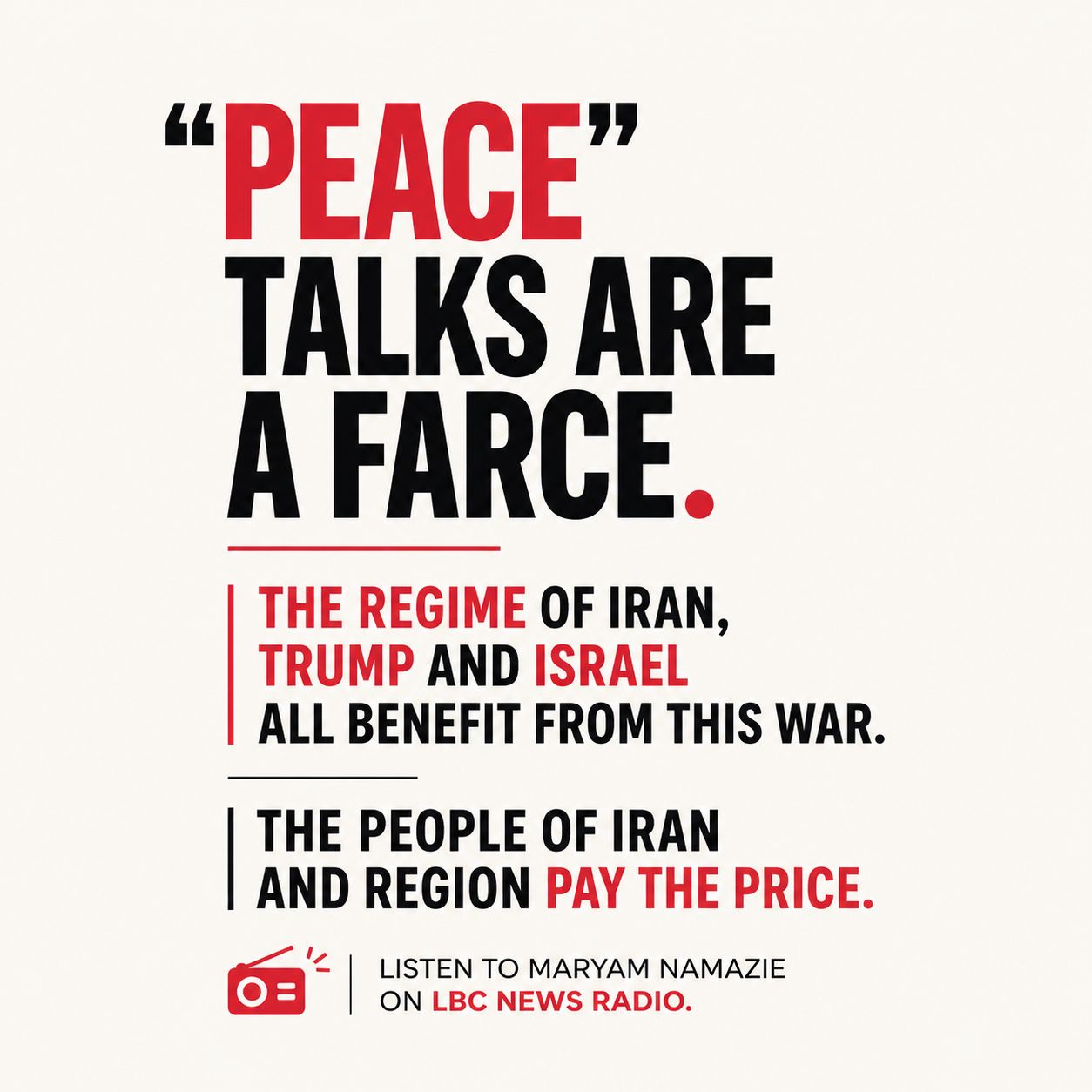
Peace Talks are a Farce
Peace talks are a farce, Sandy Warr Interview with Maryam Namazie, LBC News, 26 April 2026 “Peace” negotiations between the Islamic regime of Iran and US are a farce, a cover for a controlled war that benefits both. The war has helped rescue a regime that had been losing legitimacy since the 2022 Woman, Life,…
-
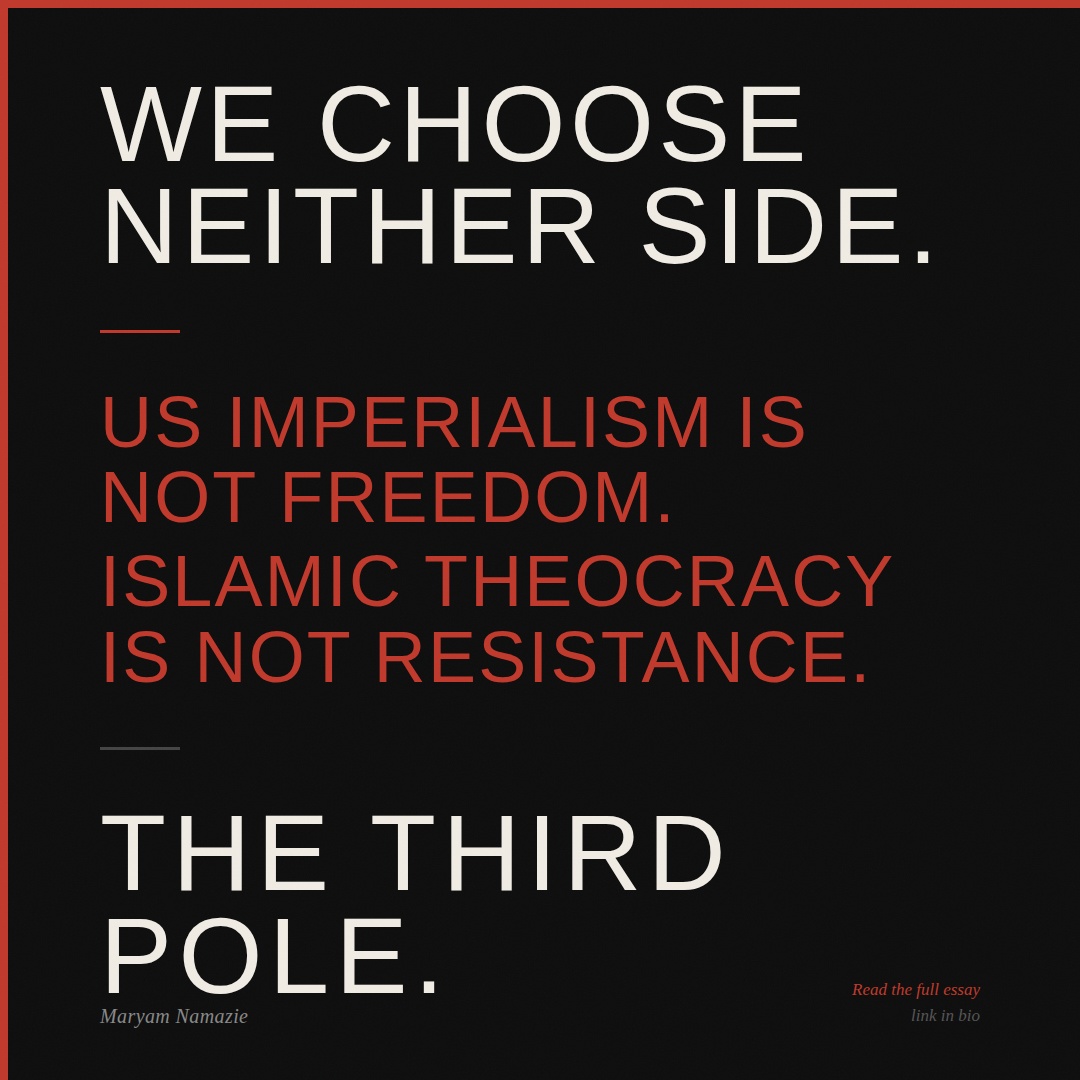
Against Political Erasure: The Third Pole And The Limits Of Anti-Imperialism
First published in Against Political Erasure: The Third Pole And The Limits Of Anti-Imperialism, The Pensive Quill, 21 April 2026 A politics of emancipation must confront both imperialism and the religious-Right. The attempt to subordinate one to the other is a form of political erasure. This essay takes up Azar Majedi and Homa Arjomand’s response to my earlier…
-
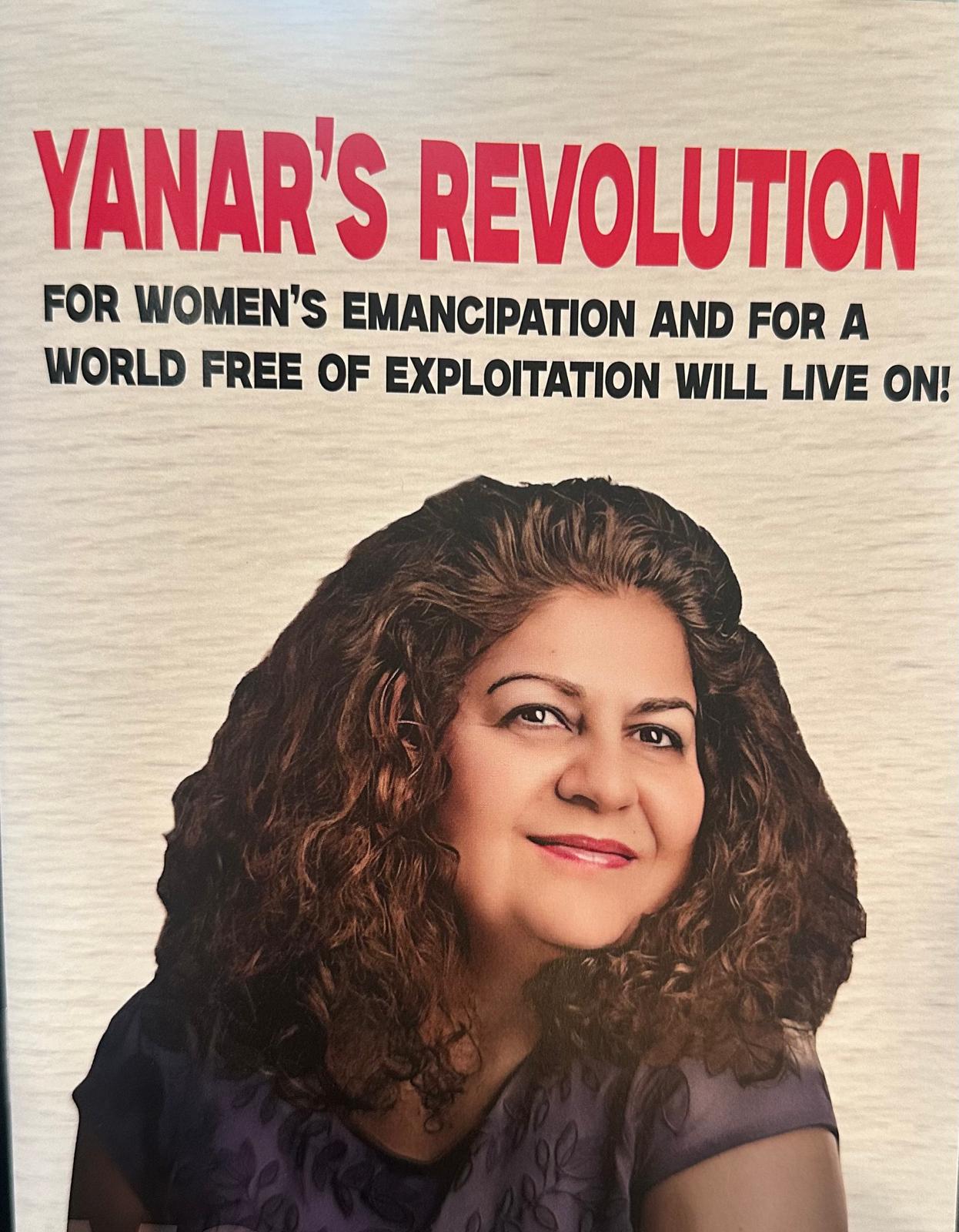
Commemorating Yanar Mohammed
On 1 March 2026, the day before she was killed, Yanar Mohammed called for accountability for sex trafficking and for ISIS crimes against women at a conference in Baghdad. The next morning, on 2 March, she was assassinated at her home. Part of her human-centred politics was a rejection of the false choice between external…
-
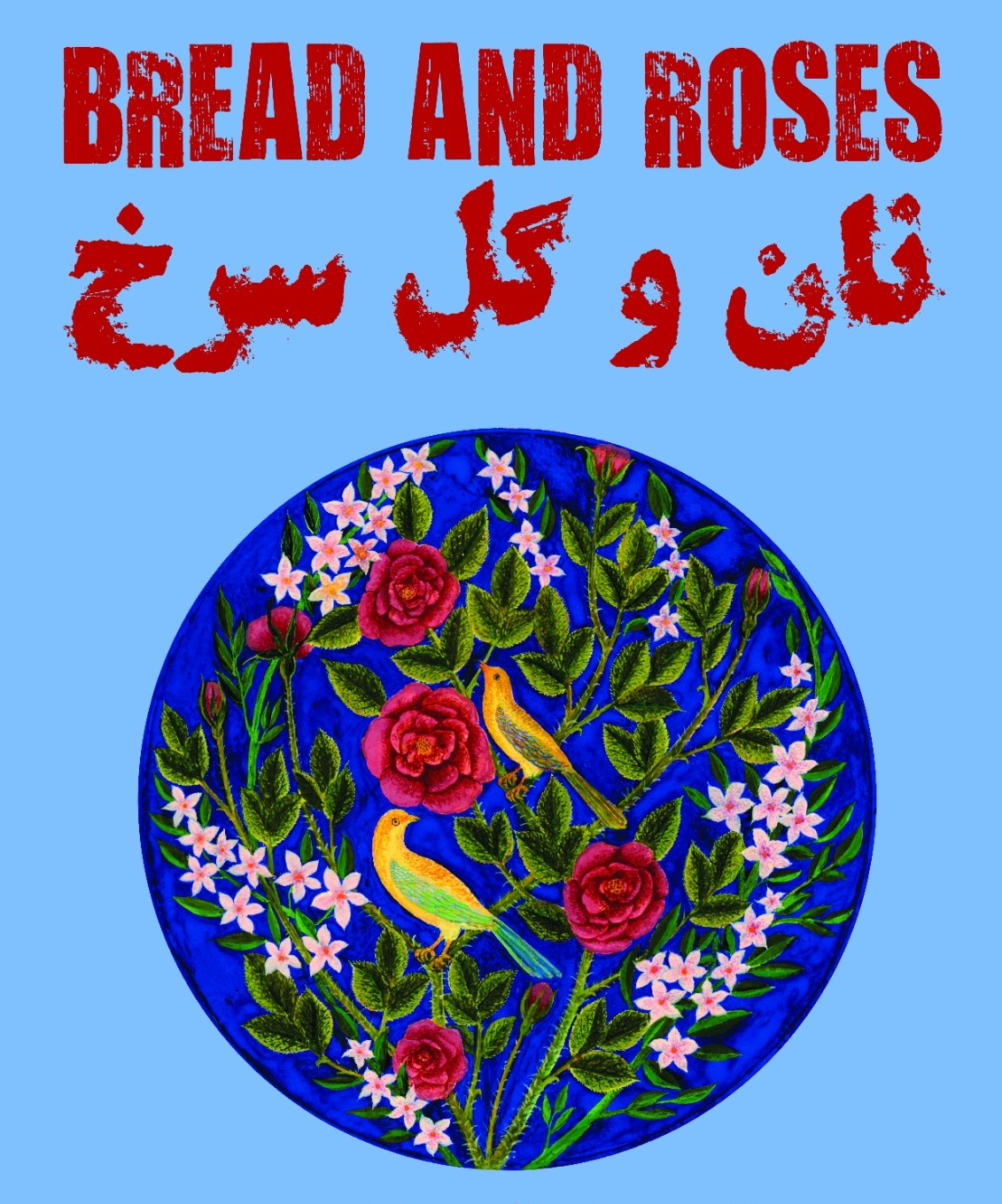
Help Bring Bread and Roses TV Back on Air
Across Iran, the region, and the global diaspora, people have risked everything for Woman, Life, Freedom, demanding a society grounded in rights, equality, and human dignity. Today, those aspirations face renewed pressure. Authoritarian forces, whether draped in religion or wrapped in nationalist flags, are growing louder, while progressive, feminist, and secular voices are pushed to…
-
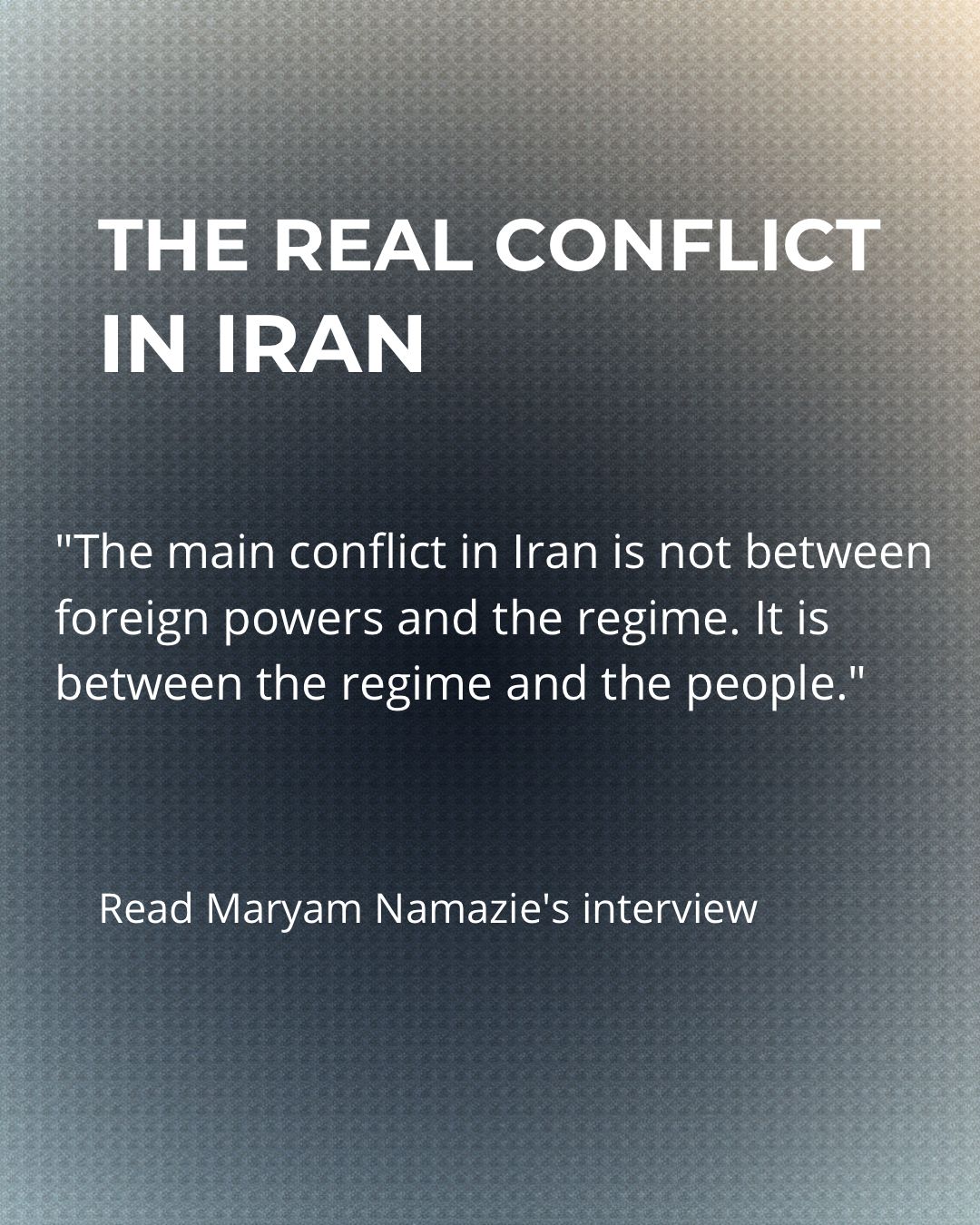
Interview with Maryam Namazie on Iran’s Revolution in the Shadow of War
French translation: La révolution sociale iranienne à l’ombre de la guerre, Imprecor In this interview, Maryam Namazie argues that the central conflict in Iran is not a proxy war between states but a social struggle between the Islamic Republic and Iranian society. She situates the 2025–2026 protests within decades of uprisings and highlights the role…
-
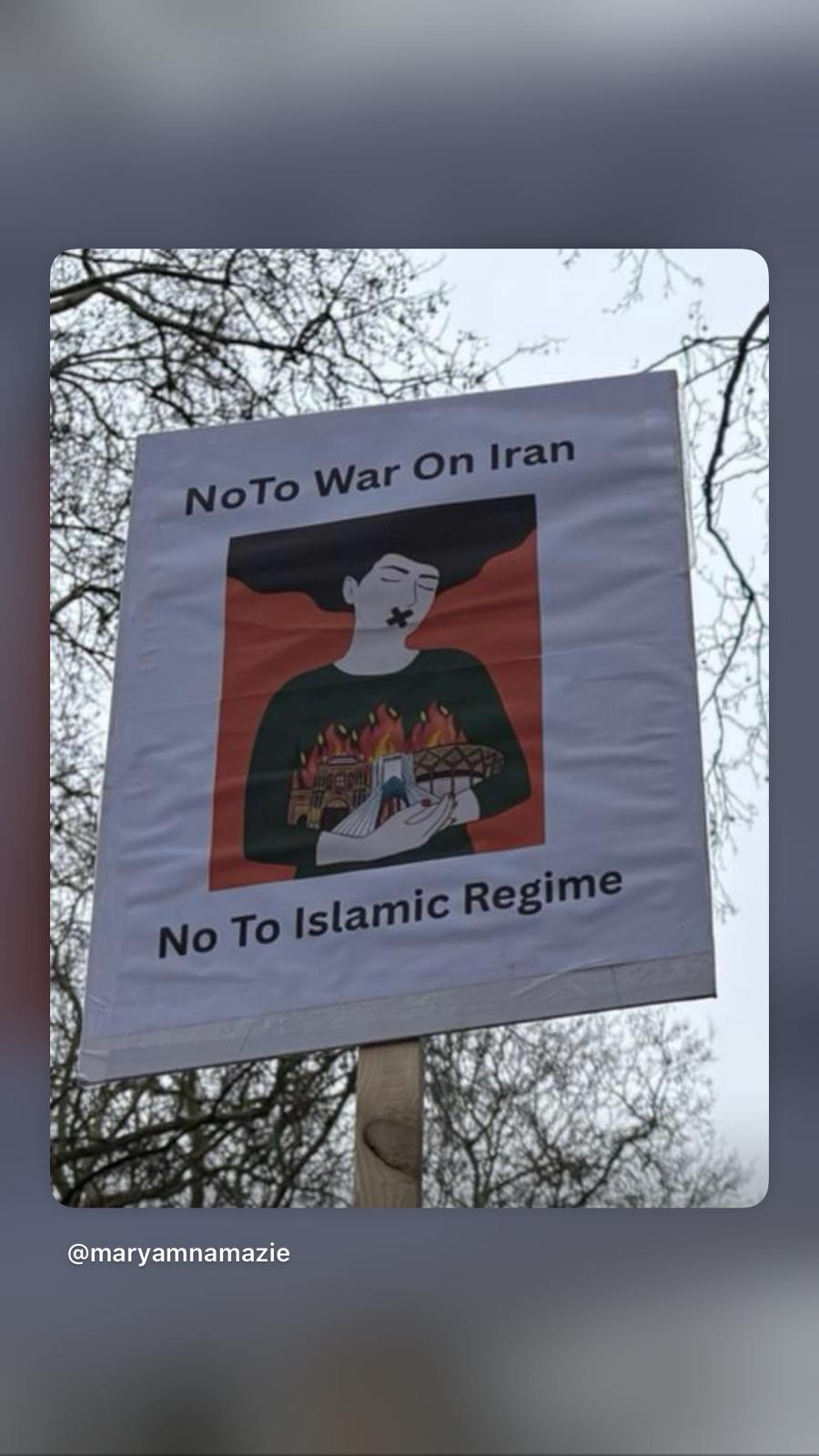
Iran: Between Bombs and Theocracy
In this compilation of various interviews for WBAI NYC Radio, BBC 5 Live, and Times Radio, which has been edited for clarity, Maryam Namazie argues that the real struggle in Iran is not between rival powers but between authoritarianism and the people who refuse to live under it. First published: Iran: Between Bombs and Theocracy, The Freethinker, 10…
-
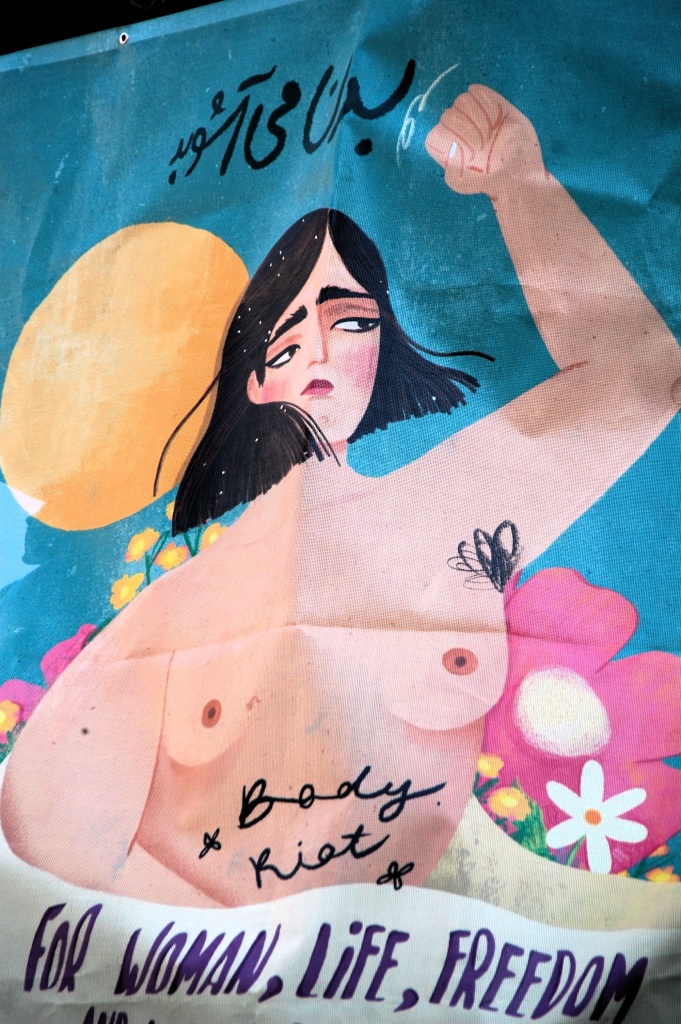
Women’s Blasphemy and the State
Blasphemous. Corrupt. Apostate. Kafir. These words are always defined from the perspective of the religious. The religious lens is treated as neutral, as default. Blasphemy is assumed to be harm, at best offensive, at worst a threat to morality, stability, and even national security. I have lost count of how many times I have been…
-
World Hijab Day and the Political Alchemy of Turning Coercion into Choice
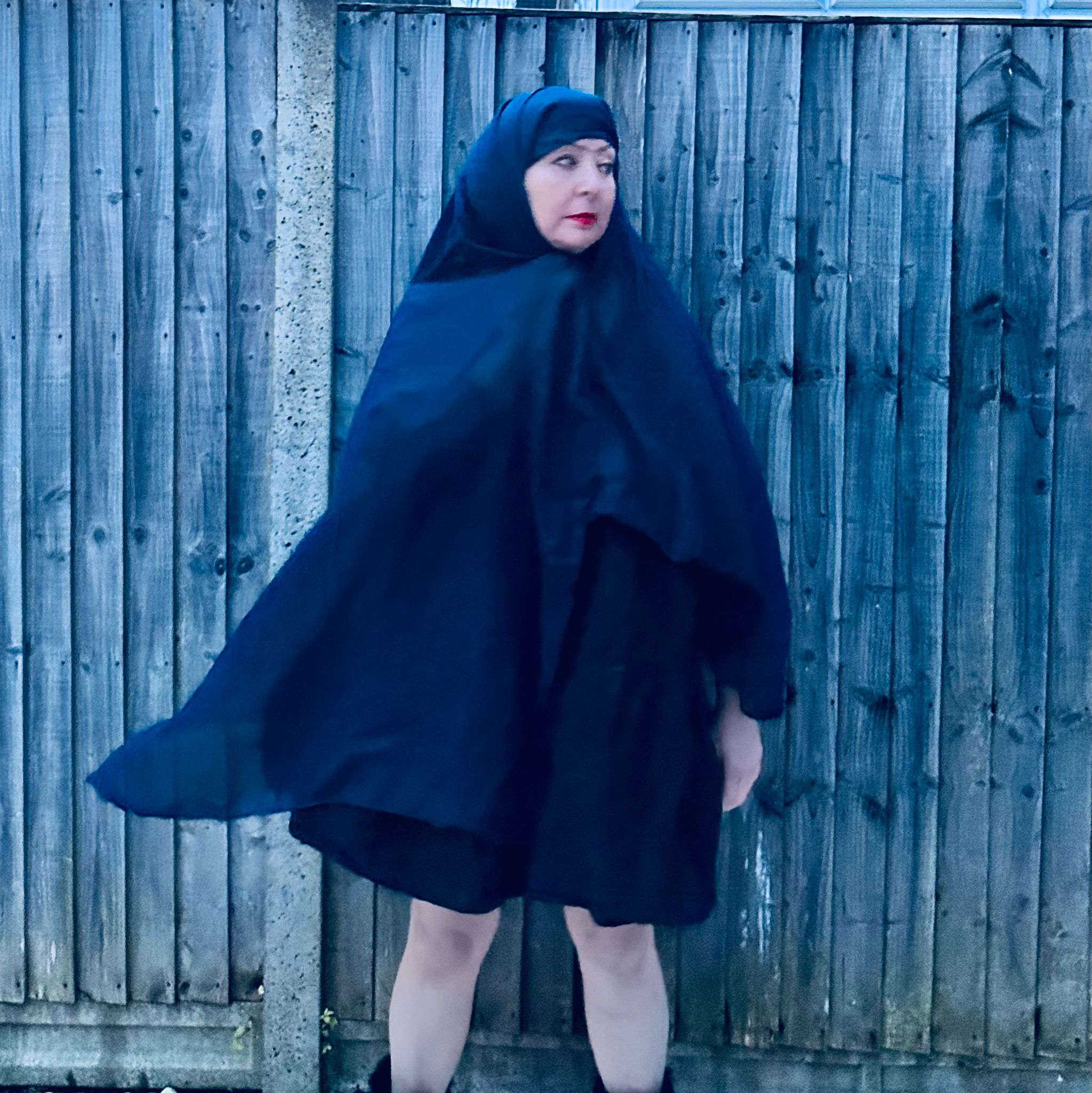
Maryam Namazie French: La Journée mondiale du hijab et l’alchimie politique qui transforme la coercition en choix Every year on 1 February, World Hijab Day invites women, primarily those whose refusal carries no consequence, to wear a hijab for a day. This invitation is framed as empathy: an opportunity to understand and affirm tolerance. In…
-

Burn your hijab: Stand in solidarity with women of Iran on No Hijab Day
On 1st February 2026, Ex-Muslims International (EXMI) calls on people everywhere to stand in solidarity with the women of Iran: Burn your hijab. Light up in solidarity with the women of Iran. The Iranian people have once again risked their lives in mass protests against an Islamic regime that suppresses society through the control, policing, and disciplining…
-
Iran: On Power, Inheritance, and the Disciplining of Women’s Bodies
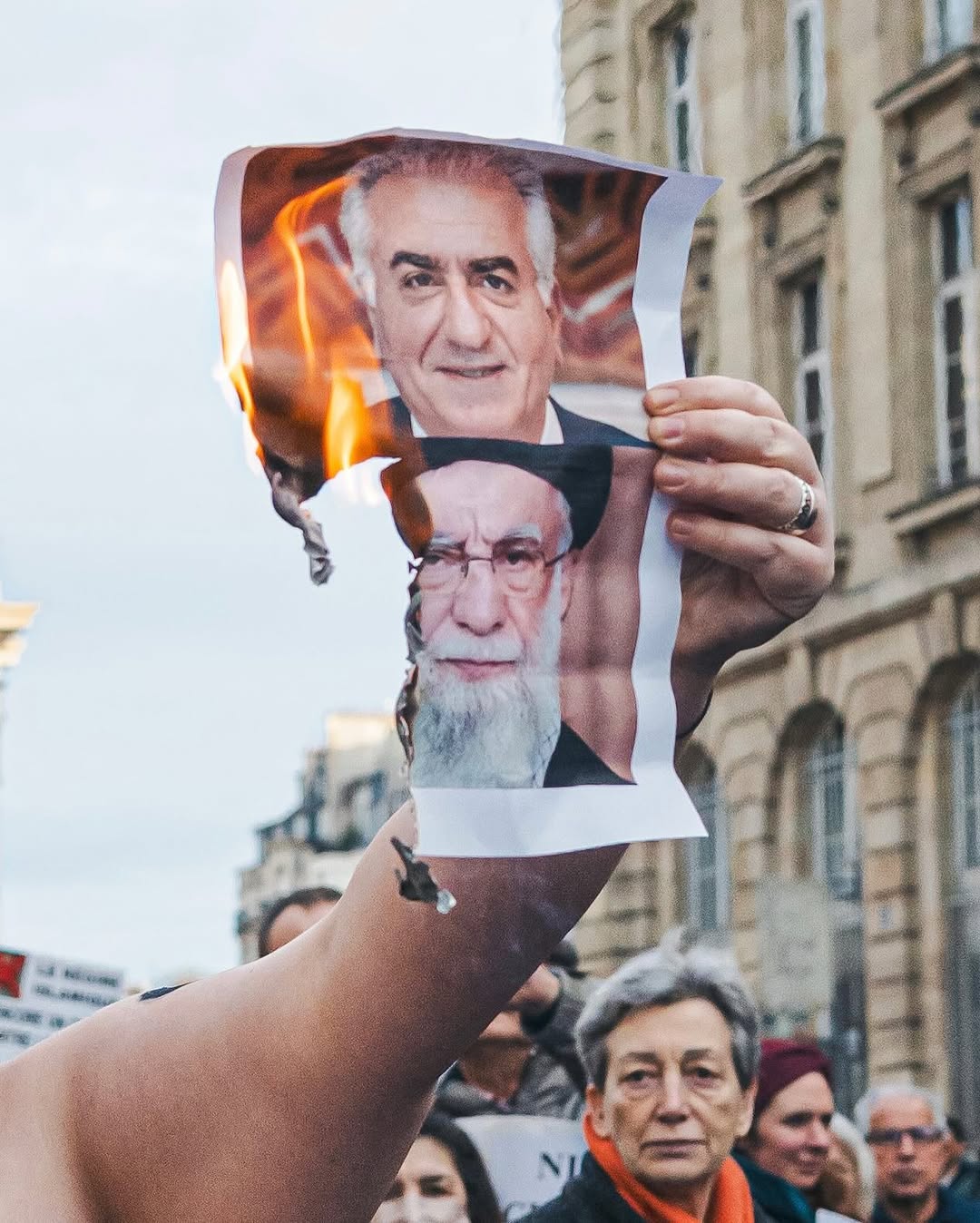
Iran: On Power, Inheritance, and the Disciplining of Women’s Bodies, The Freethinker, 25 January 2026 Farsi: ایران: دربارهٔ قدرت، حکومت موروثی، و کنترل بدنهای زنان This essay responds to critics of my 12 January 2026 Freethinker article Neither turban nor crown but Woman, Life, Freedom and of the FEMEN topless protest in Paris, during which photos of Ali Khamenei and Reza…
-
ایران: دربارهٔ قدرت، حکومت موروثی، و کنترل بدنهای زنان
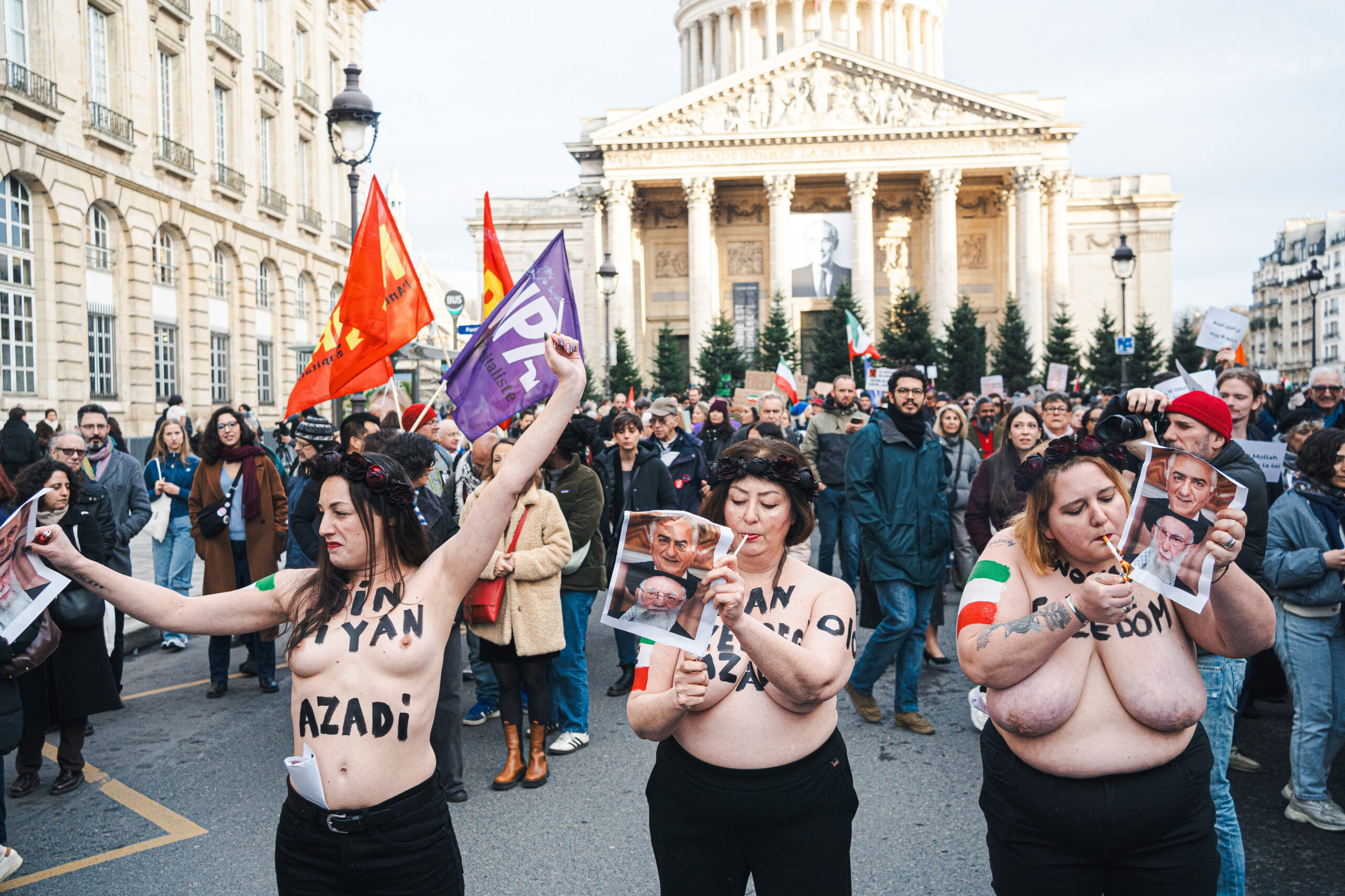
مریم نمازی این مقاله پاسخی است به منتقدانِ شعار “نه عمامه، نه تاج و آری به “زن زندگی، آزادی” و نیز به منتقدان حرکت اعتراض برهنهٔ فِمِن در پاریس که در آن تصاویر علی خامنهای و رضا پهلوی به آتش کشیده شد. هدف این نوشته دفاع از یک شعار یا یک اعتراض مشخص نیست، بلکه…